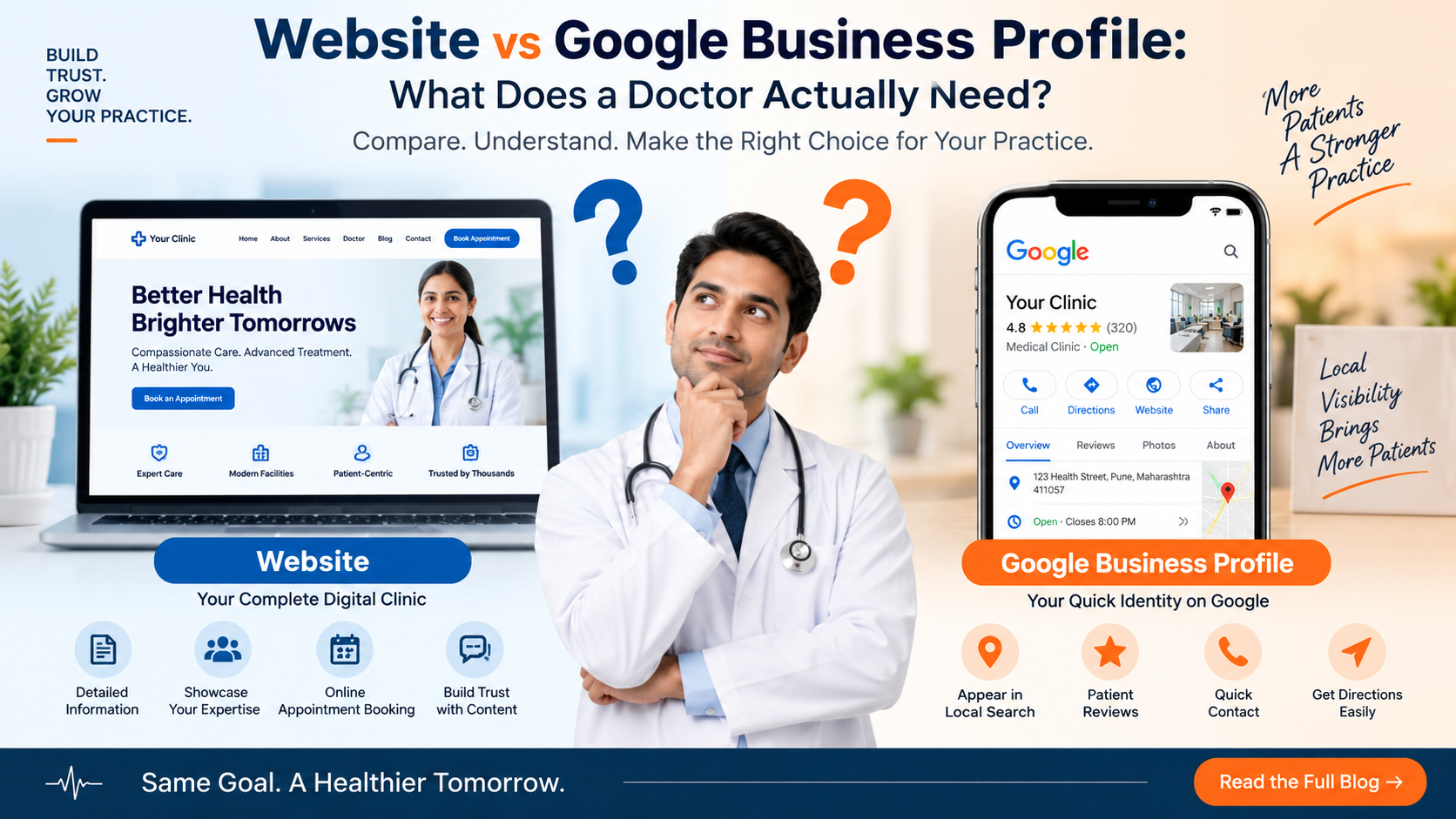
Getting patients to visit your website is only one part of digital marketing.
The next question is:
What happens when they arrive?
A healthcare website should not simply provide information.
It should guide visitors toward the next appropriate action.
That could be calling the clinic, submitting an enquiry, requesting an appointment or finding directions.
From Website Visitor to Patient Enquiry
A simple patient journey could look like:
Google Search
↓
Clinic Website
↓
Doctor & Service Information
↓
Trust
↓
Contact / Appointment
The website is an important part of this journey.
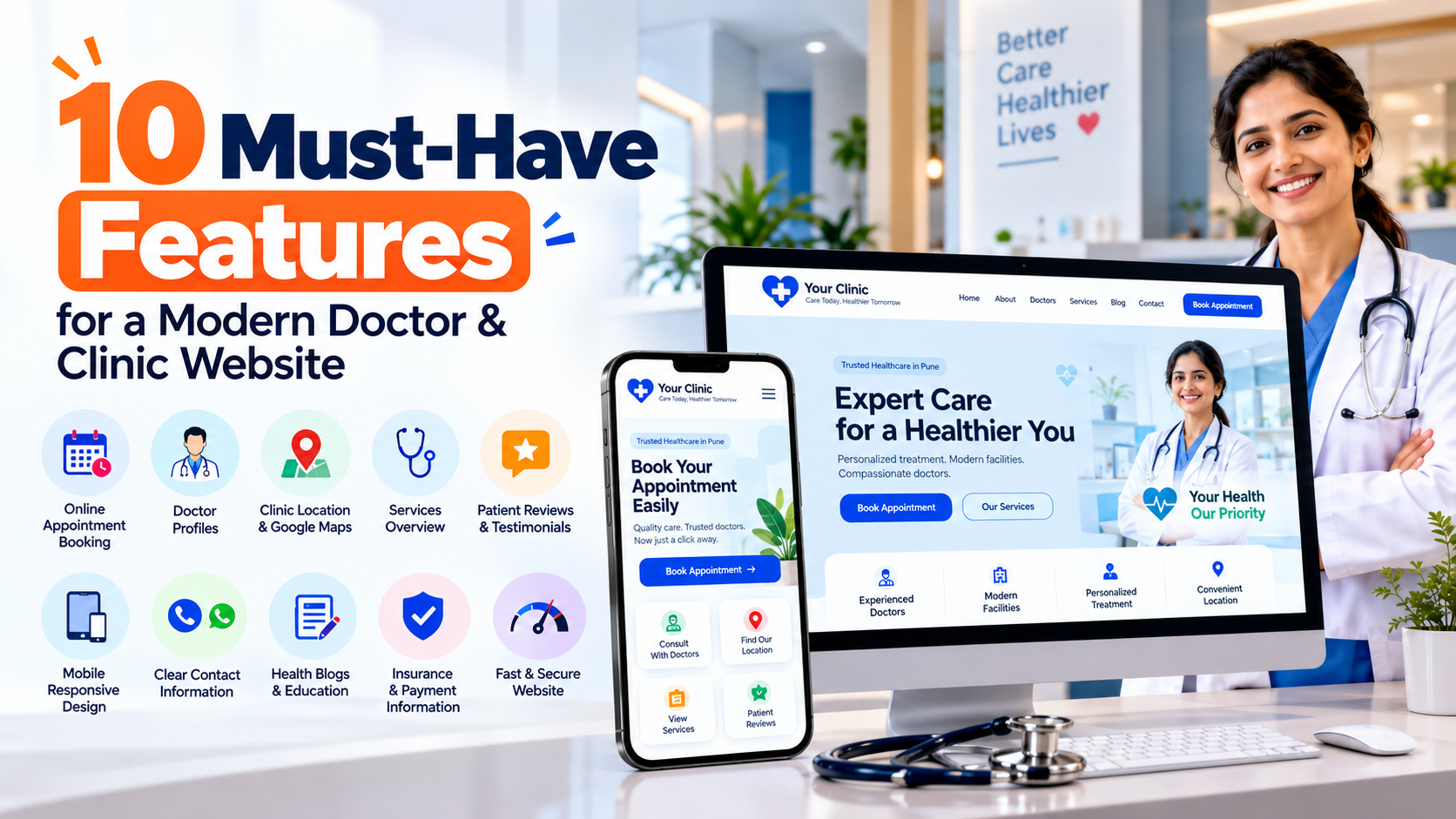
1. Clear Doctor Profiles
Patients want to understand who they are considering.
A doctor profile can include:
- Name
- Qualification
- Specialization
- Experience
- Areas of practice
- Professional memberships
- Languages spoken, where relevant
This information can help visitors understand whether the doctor is appropriate for their needs.
2. Dedicated Service Pages
Don’t put every treatment on one page.
Create dedicated pages for important services.
For example:
Cardiology
→ Consultation
→ Preventive Cardiology
→ Heart Health
A dedicated service page gives you more space to explain the service and answer common patient questions.
It also creates opportunities for search engines to understand individual pages.
Google recommends making website content clear and search-friendly so that search engines can understand what pages are about.
3. Strong Calls to Action
A website visitor should know what to do next.
Useful calls to action include:
Book an Appointment
Call the Clinic
WhatsApp Us
Request a Consultation
Get Directions
Don’t hide these actions at the bottom of the website.
4. Easy Contact Information
Your phone number should be easy to find.
The same applies to:
- Clinic address
- Opening hours
- Appointment process
5. FAQs
Patients often have similar questions.
For example:
Do I need an appointment?
What documents should I bring?
Where is the clinic located?
What are consultation timings?
An FAQ section can answer these questions before the patient contacts the clinic.
6. Educational Content
A blog can help answer questions patients search online.
For example:
When Should You See a Physiotherapist?
What Are the Signs You Should Visit a Dentist?
When Should You Consult a Dermatologist?
Educational content can also create additional search opportunities.
7. Mobile-Friendly Design
If your appointment button is difficult to use on a smartphone, you are creating unnecessary friction.
Your website should be designed around mobile users from the beginning.
Don’t Promise What You Can’t Guarantee
A healthcare website should not claim that a specific website design will automatically produce a certain number of patients.
Patient enquiries depend on multiple factors:
- Search visibility
- Competition
- Reputation
- Reviews
- Location
- Services
- Website experience
- Marketing
- Conversion process
The role of the website is to make the digital journey clearer and easier.
Measure What Matters
Website performance can be monitored using tools such as Google Search Console and Analytics.
Google explains that Search Console can show impressions, clicks and search queries that bring users to a website.
This information can help you understand which topics and pages are attracting visitors.
Build a Website That Converts Attention Into Action
A healthcare website should answer questions, build confidence and make contacting the clinic easy.
If your current website is outdated or difficult to use, Devnxt Technologies can help create a modern healthcare website for your practice.
Explore Healthcare Website Development in Pune by Devnxt.