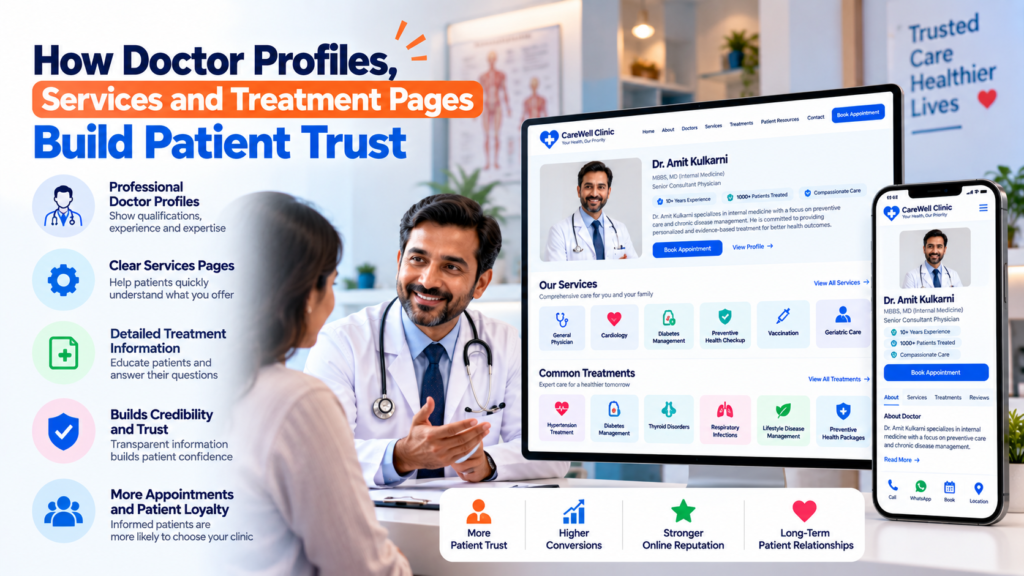
How Doctor Profiles, Services and Treatment Pages Build Patient Trust
A healthcare website should answer a simple question:
“Why should I consider this doctor or clinic?”
The answer shouldn’t be a marketing slogan.
It should be useful information.
Three areas are especially important:
Doctor Profile
Services
Treatment Information
Start With the Doctor
Patients want to know who they are consulting.
Your profile can include:
- Full name
- Qualifications
- Specialization
- Experience
- Areas of practice
- Professional information
Keep the information accurate and updated.
Explain Your Services
Patients should quickly understand what your clinic offers.
For example, a physiotherapy clinic may provide:
- Sports rehabilitation
- Back pain treatment
- Post-operative rehabilitation
- Neurological rehabilitation
Create Treatment Pages
A treatment page can answer questions such as:
What is this treatment?
Who may need it?
What does the process involve?
What questions should patients ask their doctor?
Avoid presenting general information as personalized medical advice.
Add FAQs
Common questions could include:
- Do I need an appointment?
- How long is a consultation?
- Where is the clinic?
- What should I bring?
- How do I contact the clinic?
Keep Healthcare Content Responsible
Avoid unsupported claims such as:
“100% cure.”
“Guaranteed results.”
“Best doctor in India.”
Instead, provide factual information.
Organize Content Clearly
A good structure could be:
Doctor
↓
Services
↓
Treatment
↓
FAQs
↓
Appointment
This makes the website easier to navigate.
Build a Healthcare Website Around Patient Questions
Devnxt can help structure your website around doctor profiles, services, treatments, FAQs and appointment journeys.
👉 Explore Healthcare Website Development in Pune.
You can also explore Devnxt’s existing content-focused website resources.